Medical imaging

Dentistry

Ophthalmology

Analysis laboratory

Cardiology

Public sector

General practice

Gynaecology

Anaesthesiology










Pre-exam instructions
Patient follow-up
Sending documents
Making an appointment
Confirmation of appointments



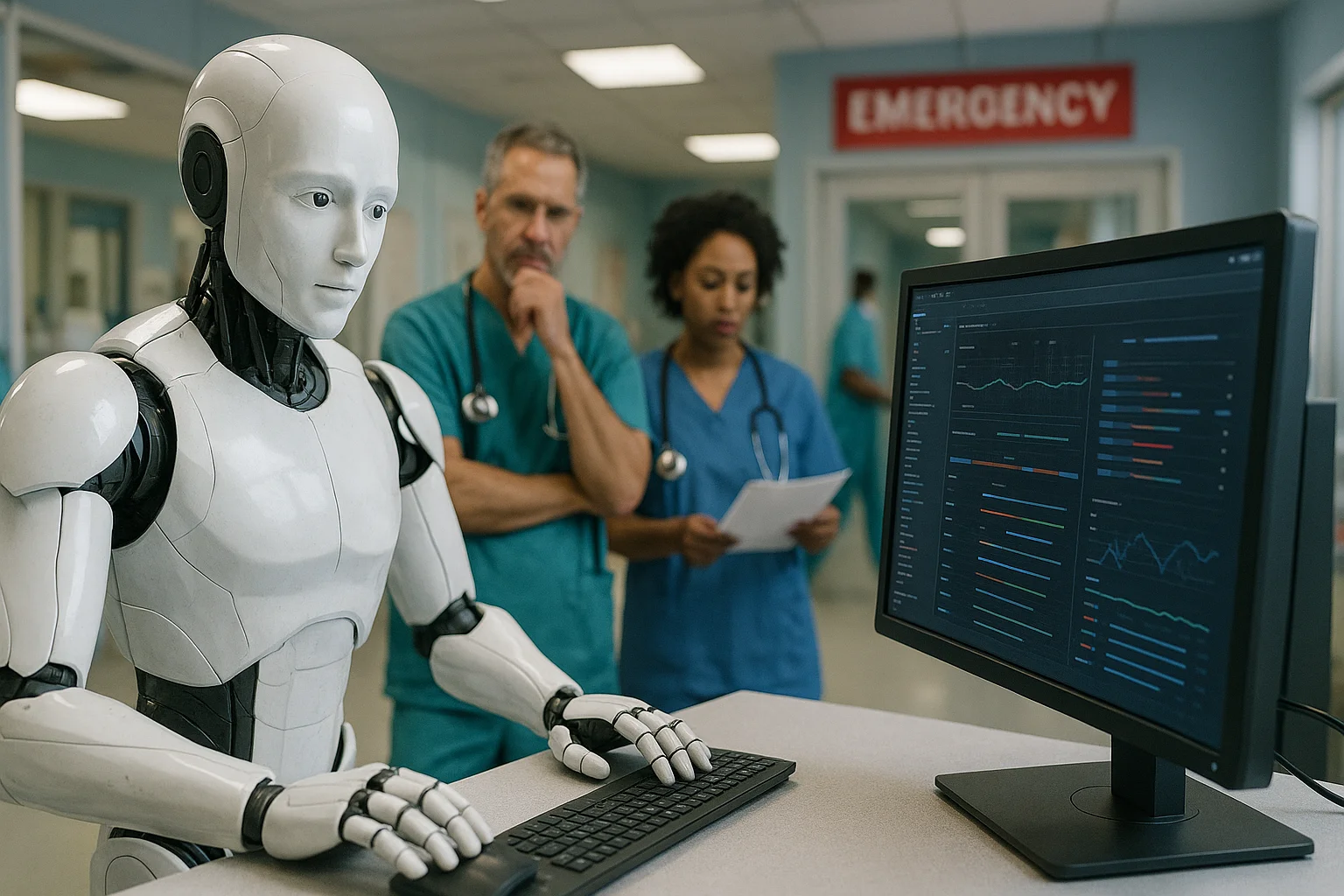



Emergency departments are under constant pressure: massive influxes, lack of resources, critical decisions. Faced with these challenges, artificial intelligence is emerging as a strategic solution to smooth patient pathways, optimise triage and relieve teams. This guide explores the concrete applications of AI, from admission to post-emergency follow-up, for a successful and human integration.
Endless waiting times, a shortage of available beds, overwhelmed staff, critical decisions to be made in a matter of minutes... hospital emergency departments are under permanent pressure. This strain has intensified with unpredictable peaks in attendance and a growing shortage of healthcare workers.
Faced with these challenges, a technological solution is emerging: artificial intelligence. Already used in medical imaging, AI is finding a strategic place in emergency care. Thanks to its capacity for analysis, intelligent triage and voice recognition, it helps to smooth patient pathways, prioritise care and lighten administrative tasks.
But how can these tools be concretely integrated into such a sensitive environment? Which applications are the most relevant, and how can a positive impact be guaranteed without harming the human relationship? This complete guide supports you in understanding, planning and succeeding in integrating AI into an emergency department, with a pragmatic, ethical and patient-oriented approach.
Hospital emergency departments suffer from chronic structural strain. Attendance has doubled in twenty years, forcing teams to manage hundreds of patients a day with often insufficient resources. This situation leads to longer waiting times, increased staff fatigue and a risk of misdirection. AI appears here as a concrete opportunity to better structure patient care and relieve teams.
One of the most promising roles of artificial intelligence in emergency care is automated pre-triage. Using algorithms and specialised voice assistants, it is possible to analyse the reasons for consultation, identify signs of severity and direct the patient to the right unit. A voice AI agent like Tennor can interact with the patient from admission, detect urgent keywords and pass the information on to the regulation teams.
Triaging patients on arrival is a crucial but time-consuming step, and a source of bottlenecks. AI-powered automated triage makes it possible to collect initial symptoms via a call or an interactive kiosk, assess potential severity and trigger a priority alert if necessary, without waiting for human intervention.
Managing patient flows and beds is a permanent logistical headache. Without an overall view, departments suffer unforeseen overloads. AI can analyse a multitude of data in real time: attendance, occupancy rates, team availability, diagnoses, etc.
By moving from reactive management to predictive management, department heads can avoid delays, reduce team stress and guarantee a smoother patient pathway within the hospital itself.
Arriving at the emergency department is a source of stress and frustration, often made worse by a lack of information. Overloaded teams do not always have time to communicate about waiting times or next steps.
A conversational AI can become a reassuring interface between the patient and the department. It can, in an automated way:
This proactive communication helps to reduce anxiety, improve satisfaction and give the patient an active role in their own care, while lightening the mental load on nursing staff.
Leaving the emergency department does not mean the end of the care pathway. Rigorous follow-up is needed to make sure instructions have been properly understood, treatment is being taken, and readmissions are avoided.
AI can automate this crucial step through tools like Tennor, which can:
This automated follow-up ensures systematic continuity of care, improves therapeutic adherence, and allows for early detection of potential complications, thereby reducing risks and costs associated with readmissions.
Far from dehumanizing care, artificial intelligence in emergency departments proves to be a powerful ally for medical teams and patients. By automating triage, optimizing workflow management, improving communication, and ensuring rigorous follow-up, AI allows healthcare staff to refocus on their primary mission: providing care.
Solutions like Tennor already show how an intelligent voice assistant can transform patient intake and triage. By thoughtfully and ethically integrating these technologies, emergency services can not only gain efficiency but also provide safer, smoother, and more humane care.
Contact Tennor for a personalized demonstration and discover how artificial intelligence can address the specific challenges of your emergency department.

+4M calls answered. Join partners who trust Tennor.