Medical imaging

Dentistry

Ophthalmology

Analysis laboratory

Cardiology

Public sector

General practice

Gynaecology

Anaesthesiology










Pre-exam instructions
Patient follow-up
Sending documents
Making an appointment
Confirmation of appointments



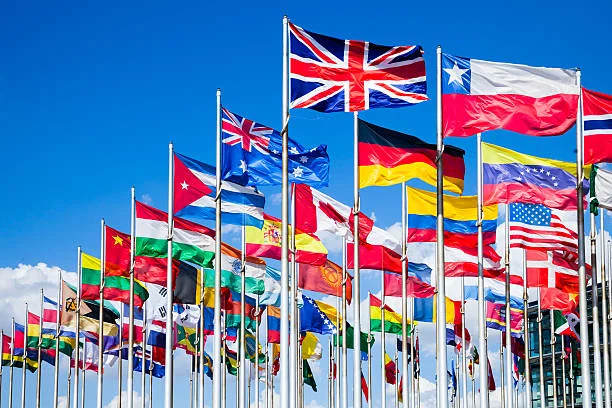



Language must no longer be an obstacle to care. Offer seamless communication in 5 languages, 24/7. Thanks to AI, your practice becomes a truly inclusive space.
In an increasingly globalised world and an increasingly diverse society, the language barrier is one of the most significant and most underestimated obstacles to equitable access to care. For a patient who does not speak French fluently, an act as simple as booking a medical appointment can turn into an anxiety-inducing, even insurmountable, ordeal. This communication difficulty is not a mere inconvenience. It is a source of misunderstandings, delayed diagnoses, treatment errors and, ultimately, a genuine loss of chance.
Medical practices and centres, even with the best will in the world, are often helpless in the face of this reality. It is materially impossible to have multilingual reception staff able to respond with the same ease in French, English, Spanish, Arabic or Mandarin. The result is approximate communication, stressful for patient and staff alike, and access to care that becomes, de facto, unequal.
What if the most advanced technology could provide the most human solution to this fundamental problem? That is precisely the promise of multilingual conversational artificial intelligence. Offering seamless communication in 5 languages (or more) is no longer the privilege of large international institutions. It is a capability now accessible to every practice, thanks to platforms like Tennor.
This article explores in depth how AI breaks the language barrier in healthcare, why it is a major strategic lever, and how this functionality transforms a medical practice into a truly universal and inclusive place of care.
Difficulty communicating in a care context is not a marginal problem. It has serious and measurable consequences.
Even when contact is established, imperfect communication is a minefield.
The language barrier is also a burden for reception staff.
Conversational artificial intelligence, thanks to the lightning progress of neural translation and voice synthesis, offers an elegant and powerful solution to this challenge.
A platform like Tennor integrates advanced language models capable of operating in several languages. The process is smooth and transparent for the user.
- Option 1 (Menu): "Bonjour et bienvenue. Pour continuer en français, tapez 1. To continue in English, press 2. Para continuar en español, presione 3..." - Option 2 (Automatic detection): The AI may be able to detect the language spoken by the caller within the first few seconds and switch automatically.
This is not the robotic, literal translation of early online tools. Modern AIs use neural models that enable:
For the non-French-speaking patient, the experience is that of a conversation with a native, clear and patient interlocutor.
Offering a multilingual welcome is not a mere "plus". It is a competitive advantage and a major quality lever.
This is the most fundamental benefit. You remove one of the main barriers to accessing care.
Case study 1: A general practice in a cosmopolitan neighbourhood A Parisian practice finds that a significant share of its potential patient base is of foreign origin (students, expatriates, tourists). By setting up telephone answering in French, English, Spanish, Arabic and Mandarin via Tennor, it sees the number of new patients increase by 25% in 6 months. The AI simply made the practice accessible to those who lived nearby but did not dare call.
Case study 2: Avoiding a post-operative error A Spanish-speaking patient leaves after minor dermatological surgery. In the evening, they feel pain. They call the practice. The AI interacts with them in Spanish.
Tennor AI (in Spanish): "Do you have a fever or notice any significant bleeding?" Patient (in Spanish): "No, no bleeding, but it's very red and hot." AI (detecting a potential sign of infection): "I understand. I will immediately leave a priority message for Dr. Peau with this information. He will contact you again as soon as possible."
This interaction, impossible without AI, made it possible to detect a complication early and ensure rapid care.
1. Is machine translation truly reliable enough for the medical field, where every word counts?
This is a crucial concern. We need to distinguish between two things:
AI manages multilingual logistics, not multilingual medicine.
2. What are the 5 most relevant languages to offer?
This naturally depends on the demographics of your patient base. However, a very solid starting point that covers a large portion of needs in France is:
A platform like Tennor is flexible and can integrate the most relevant languages for your practice.
3. Is implementing a multilingual solution more complicated or more expensive?
With a modern SaaS platform, complexity is minimal. Adding languages is a feature that can be easily activated. The cost might be slightly higher due to the use of more sophisticated language models, but this investment quickly pays for itself through an expanded patient base and efficiency gains.
4. If the AI speaks multiple languages, does the human intermediary (my secretary) also need to be multilingual?
No, and that's the beauty of the system. The AI acts as the translator. If it needs to transfer a call, it can provide a summary of the request in French to the secretary before connecting the patient. The secretary then knows what the call is about. For the conversation itself, "gateway" solutions with professional telephone interpreting services can be integrated for complex cases. But for most transfers, real-time translation tools can already be a great help.
5. Can AI truly understand the cultural nuances associated with each language?
The most advanced language models are trained on vast corpora of texts and conversations that include these nuances. They learn to use appropriate polite forms, the right level of formality, and so on. Of course, a human's cultural sensitivity will always be superior, but AI offers a standardized and respectful level of communication that is already far beyond approximate communication in a poorly mastered language.
Offering seamless communication in 5 languages is no longer a luxury reserved for international hospitals. It's a strategic, ethical, and commercial decision within reach of every practice that wishes to adapt to societal realities. It's an affirmation that access to care is a universal right that should not be hindered by language barriers.
Voice artificial intelligence is the technology that makes this vision possible. By acting as a universal, patient, and always-available interpreter, a solution like Tennor doesn't just modernize a phone system. It opens your practice's doors to the world.
By adopting this approach, you don't just expand your patient base. You improve the safety of your care, reduce your team's stress, and send a powerful message: that of an open, inclusive, and deeply human practice, which puts the best technology at the service of the noblest mission: providing care, without distinction.

+4M calls answered. Join partners who trust Tennor.