Medical imaging

Dentistry

Ophthalmology

Analysis laboratory

Cardiology

Public sector

General practice

Gynaecology

Anaesthesiology










Pre-exam instructions
Patient follow-up
Sending documents
Making an appointment
Confirmation of appointments



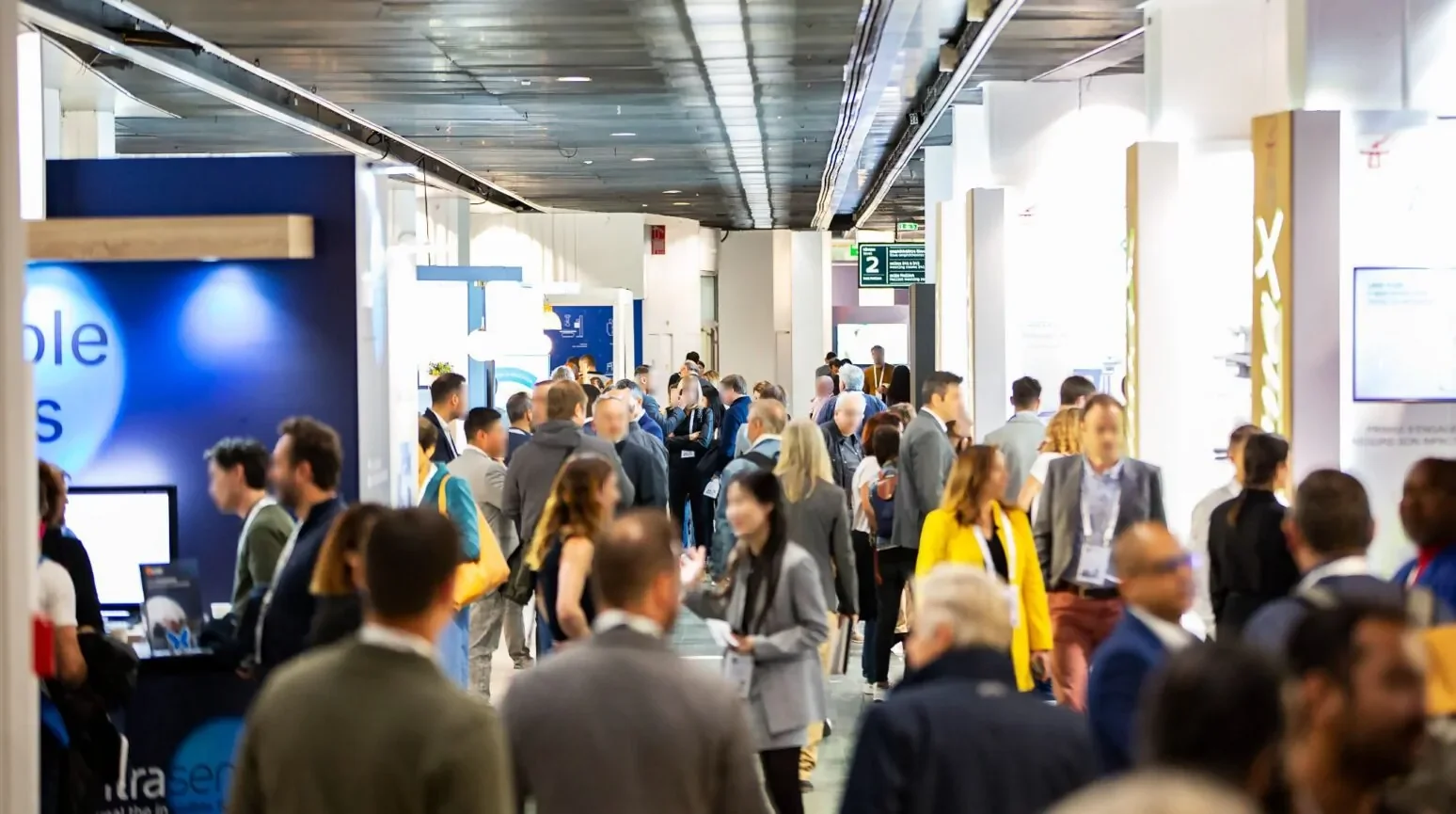



Is call and appointment management paralysing your imaging centre? Tennor will be at JFR 2025 to present the solution. Discover how our voice AI is designed for the challenges of modern radiology and come and test it on our stand.
From 3 to 6 October 2025, the French-speaking imaging world meets in Paris. The Journées Francophones de Radiologie (JFR) are far more than just a congress; they are the moment when the brightest minds in the discipline meet, where tomorrow's innovations are unveiled, and where the future of radiology takes shape. With more than 13 000 expected participants, this edition promises to be exceptional.
This year, the central theme, "Radiology, the images of a lifetime", places particular emphasis on the patient experience and access to care. It is a vision we deeply share at Tennor. Because we are convinced that the excellence of an imaging examination depends not only on the performance of the machine or the expertise of the radiologist. It depends on the entire journey, and that journey very often begins with a simple phone call.
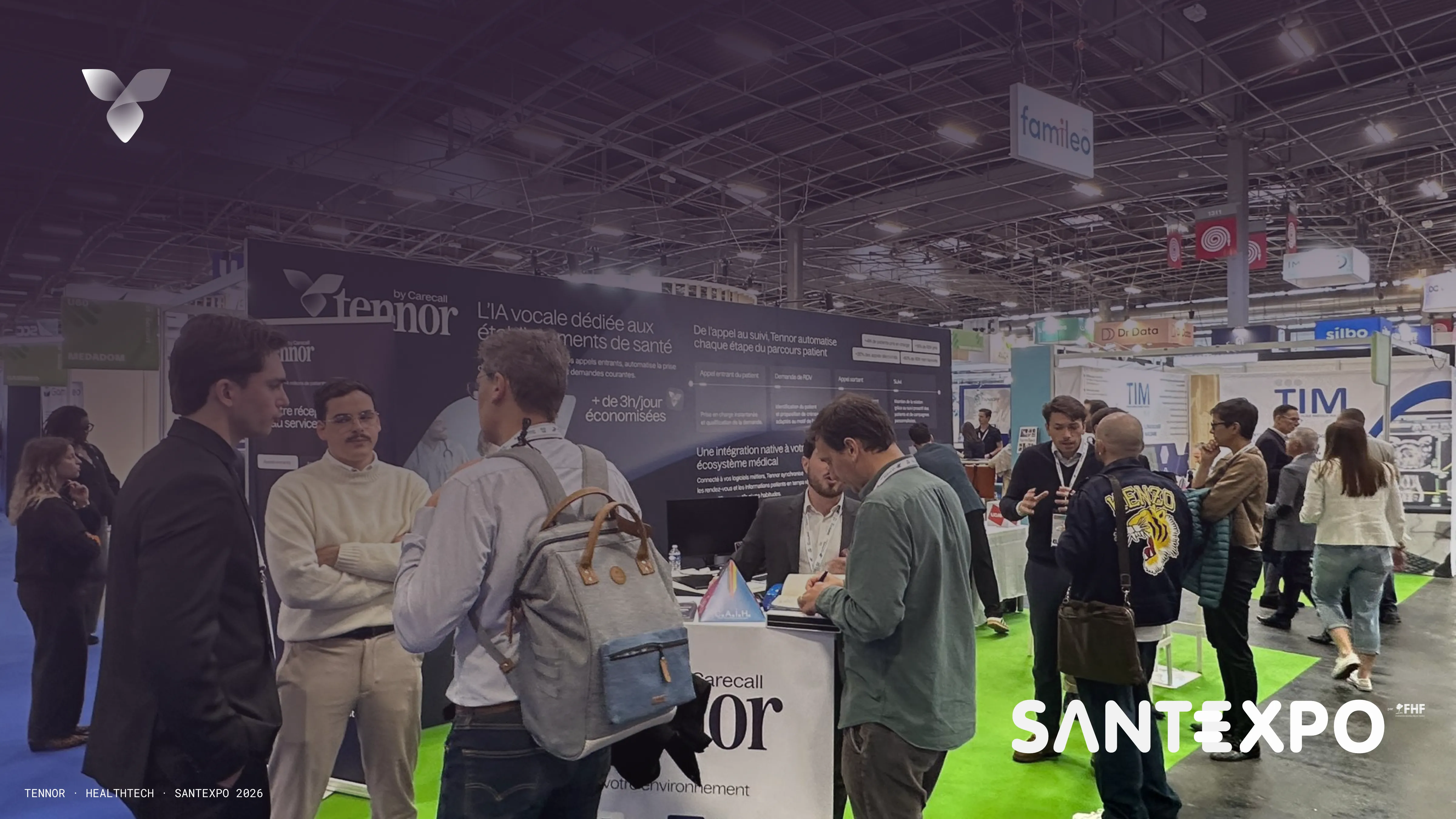
That is why we are particularly proud to announce that Tennor will be present at JFR 2025. We invite you to meet us on stand 221D to discover and test the voice AI solution that is revolutionising the management of medical imaging centres.
This article is an introduction to what we will be presenting: a technology that does not merely automate, but streamlines, secures and humanises the front door of your centres.
The theme of JFR 2025, "Radiology, the images of a lifetime", and its focus on the patient experience are at the heart of our mission. A care pathway is a chain whose strength depends on every link. You can have the highest-performing 3 Tesla MRI and the most renowned radiologists, but if a patient spends 15 minutes on hold on the phone, if they receive incorrect pre-examination instructions, or if their urgent call is not prioritised, their overall experience is degraded. The perception of the quality of the medical act itself will be affected.
First impressions are indelible. Yet for thousands of patients, that first impression is your telephone switchboard. This is where Tennor comes in. Our AI assistant for medical practices is not a gadget. It is a strategic tool designed to guarantee that the first link in the chain - reception - is as excellent as the rest of your practice.
By ensuring an instant response 24/7, by conveying clear and reliable information, and by handling requests with infinite patience and precision, voice AI lays the foundations of a relationship of trust. It guarantees that the administrative experience matches the clinical excellence you offer. Coming to meet us at JFR means discovering how to secure and enhance this crucial first contact.
A medical imaging centre is not a practice like any other. Its management is a finely tuned choreography, where every person and every piece of equipment must be perfectly synchronised. Tennor's AI has been specifically trained to understand and solve these unique challenges.
Manually scheduling an imaging examination is a task of mind-boggling complexity. The secretary has to juggle with:
How Tennor solves this problem: Our AI integrates all these rules into its decision engine. It qualifies the patient's request, consults the schedules of the machine AND the staff, and only offers slots that perfectly match all the constraints.
A concrete example: A patient calls for "a shoulder MRI with injection". Tennor's AI knows that this procedure lasts 45 minutes, requires the MRI-2 scanner, and a period of medical presence. It will look for a slot where all these conditions are met and will systematically remind the patient to bring their prescription for the contrast agent.
A no-show for a general practice consultation is a loss. A no-show for a CT or PET scan slot is a financial disaster. The machine sits idle, staff are mobilised, and the loss runs into hundreds, even thousands of euros.
How Tennor solves this problem: We deploy ultra-efficient automatic patient reminder workflows.
"Have you been fasting?", "Have you removed all metallic objects?". These questions, asked just before the examination, often come too late. Poor patient preparation leads to a last-minute cancellation, as costly as a no-show.
How Tennor solves this problem: Instruction delivery is integrated and systematic.
Words are not enough. The best way to understand the impact of AI in radiology is to see it in action. On our stand 221D, you will be able to:
Don't take our word for it, come and see for yourself. Is managing your telephone reception a source of stress? Are you losing too much time and money because of no-shows? Is your team exhausted? Then a visit to our stand could be the most profitable moment of your congress.
1. Our centre uses a specific RIS / PACS. Can your solution integrate with it?
Yes. This is a fundamental question. Tennor is designed to be interoperable. Our solution integrates via standard APIs with the majority of diary software and radiology information systems (RIS). The goal is to guarantee perfect, real-time synchronisation, so that your schedule remains the single source of truth, with no double entry.
2. Emergency management is critical in imaging. How does the AI handle a call about a suspected stroke or pulmonary embolism?
Safety is our absolute priority. The AI is trained to recognise a wide range of emergency keywords and scenarios. As soon as a critical situation is detected, it interrupts its normal process and applies an escalation protocol that we define with you. This can be an immediate transfer to an internal emergency line, sending an SMS alert to the on-call radiologist, or directly advising the patient to call 15. The AI is a safety net that works 24/7.
3. The return on investment looks interesting, but what does implementation cost?
Our model is a subscription, which means there is no heavy upfront investment cost. Deployment is a service included in the implementation. The return on investment is extremely fast. Often, simply avoiding a few no-shows per month on examinations such as MRIs or CT scans is enough to cover the full cost of the subscription. Everything else - time savings, patient satisfaction, team serenity - is net benefit.
4. My team of secretaries is highly skilled. Won't they feel threatened by AI?
On the contrary, AI is their best ally. We always position our solution as a tool to augment teams, not replace them. By taking on the 80% of repetitive and time-consuming calls, AI frees secretaries to devote themselves to high-value tasks: personalised reception of patients (especially the most anxious), managing complex cases, coordinating with referring physicians, and supervising the smooth running of the centre. Their role becomes more strategic and less stressful.
JFR 2025 is placed under the sign of innovation in the service of the patient. The clinical and technological excellence of modern radiology can no longer be held back by administrative management from another age.
The health voice solution from Tennor is much more than just an enhanced phone system. It's a true organizational partner, understanding the unique challenges of medical imaging centers and providing a concrete, reliable, and cost-effective solution.
We look forward to meeting you at the Palais des Congrès in Paris, from October 3 to 6, to discuss with you and show you how AI can help you build a seamless patient journey, from the first word to the final image.
Visit us at booth 221D to shape the future of your center together.

+4M calls answered. Join partners who trust Tennor.