Medical imaging

Dentistry

Ophthalmology

Analysis laboratory

Cardiology

Public sector

General practice

Gynaecology

Anaesthesiology










Pre-exam instructions
Patient follow-up
Sending documents
Making an appointment
Confirmation of appointments



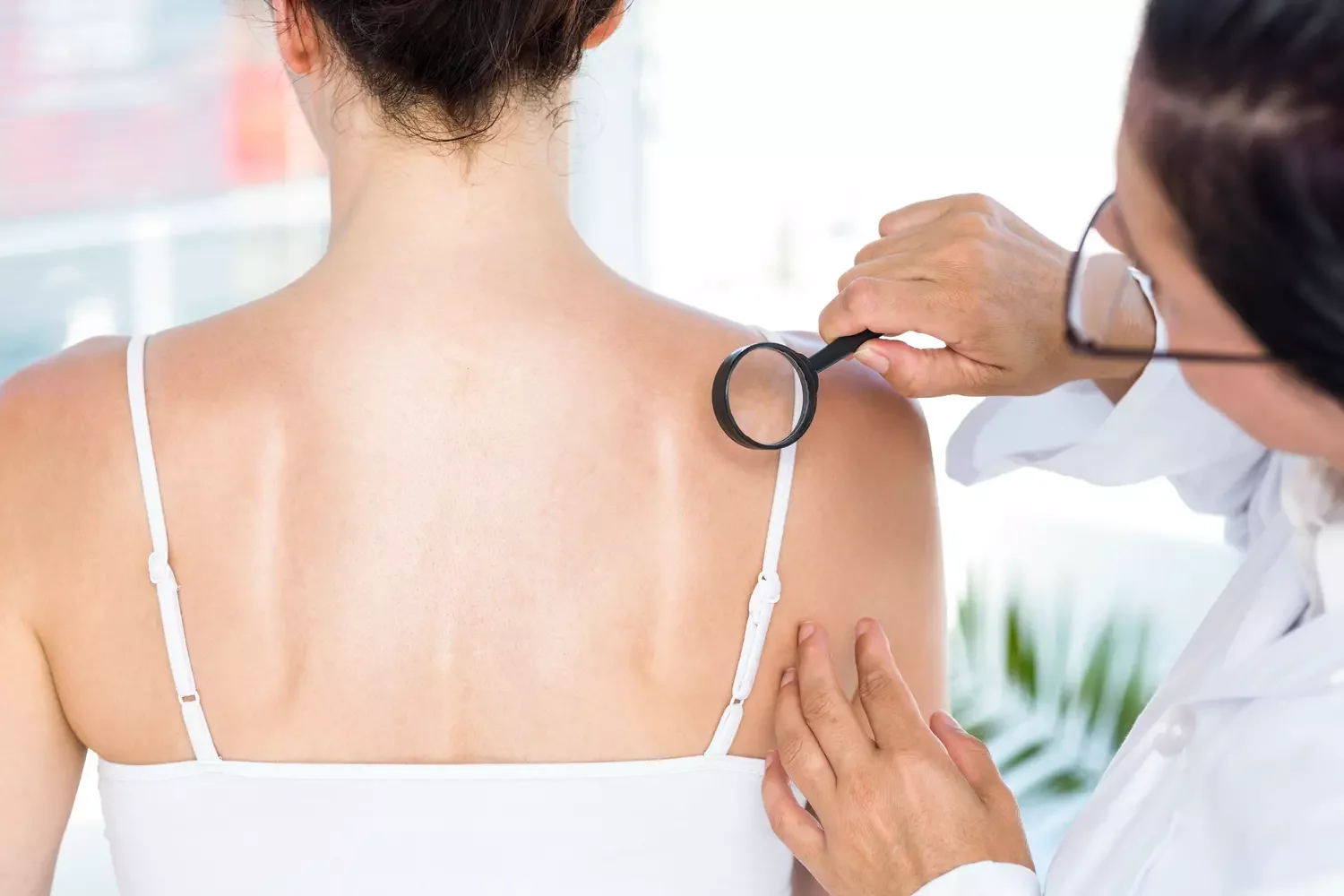



Running a dermatology practice is a unique challenge: skin emergencies, mole monitoring, aesthetic procedures, waiting times... Discover how an AI assistant transforms your organisation for faster, safer and more efficient care.
The dermatology practice is one of the most in-demand in the French medical landscape. The speciality sits at the crossroads of many paths: general medicine with skin cancer screening, surgery with lesion removal, infectious diseases with skin conditions, allergology, paediatrics, and increasingly, aesthetics. This diversity of procedures, combined with strong demand and a stretched specialist workforce, creates immense pressure on care facilities.
The consequences are well known: appointment waiting times stretching over months, a constantly saturated switchboard, and an administrative team that must sort an incessant flow of requests ranging from juvenile acne to suspected melanoma. In this environment, the ability to sort the urgent from the schedulable, to manage diaries efficiently and to communicate clearly with patients is not just a matter of comfort, but of public health.
It is in this high-tension context that conversational artificial intelligence offers an opportunity for major transformation. An AI assistant for a dermatology practice does more than answer the phone. It acts as an intelligent regulation system, an expert planner and a reliable communicator, allowing the dermatologist and their team to refocus on their essential mission: the diagnosis and care of the skin.
This article is a complete guide for dermatologists and their teams, to explore in depth how a voice AI solution like Tennor can optimise every aspect of managing your dermatology practice, from appointment booking to emergency management.
The practice of dermatology is marked by a great heterogeneity of reasons for consultation and variable criticality of requests, which makes its organisation particularly complex.
A dermatologist's diary is a mosaic of appointments of very different natures and requirements:
Making all these types of procedures coexist smoothly in the same schedule, while integrating emergencies, is a daily logistical challenge.
The telephone is the main channel through which patients, often worried, try to reach the practice. The secretariat must carry out triage of great subtlety:
This triage responsibility is immense, especially when it must be exercised in a context of call saturation.
The tension between supply and demand in dermatology is such that many practices are forced to turn away new patients or to offer waiting times of several months. Managing this situation over the phone is delicate and time-consuming for the secretariat.
Faced with these challenges, an AI assistant for a dermatology practice like Tennor brings rigorous organisation and structured communication.
Tennor's AI is trained to qualify reasons for consultation and identify priority situations.
Case study 1: Detecting a potential dermatological emergency
This system ensures that no warning sign is lost or delayed because of a saturated switchboard.
AI is capable of managing scheduling complexity according to the reason for the visit.
Case study 2: Booking a surgical removal
The AI can be configured to filter and direct aesthetic requests, which often have a different care logic.
This makes it possible to separate the "medical" and "aesthetic" flows, for clearer organisation.
The introduction of AI has a profound impact on the team's daily life and the practice's overall efficiency.
By automating the handling of standard calls, AI allows the secretary to concentrate on missions of higher human and organisational value:
The secretariat becomes a strong link in the care chain, and no longer just a telephone switchboard.
Faced with saturation, AI can manage the practice's policy on new patients in a systematic and non-confrontational way.
For the patient, the interaction with the practice becomes faster, simpler and more efficient.
1. Dermatology is a very visual specialty. How can a voice AI, which has no eyes, be relevant for triage?
That's a crucial point. Voice AI does not perform visual diagnosis. Its role is to triage based on the patient's description and history. It is trained to recognize risk scenarios from keywords. If a patient describes a lesion using terms like "asymmetrical, irregular borders, multiple colors, growing," the AI doesn't need to see it to know it's a top priority. It acts as a speech-based alert system, which is incredibly effective at identifying situations that quickly require a human eye.
2. My patients often send me photos by email. Can AI handle that?
Voice AI Tennor focuses on the telephone channel, but it integrates into a multichannel approach. It can be configured to answer calls by directing them to the correct channel. For example: "For any request involving photo submission, Dr. Peau invites you to use our secure contact form on our website. I can send you the link via SMS." This way, it channels requests to the appropriate tools, preventing the doctor's inbox from becoming an unstructured consultation space.
3. How does AI distinguish between a request for a medical consultation and a request for an aesthetic peel, which have different pricing and scheduling?
Thanks to initial qualification. The AI can ask: "Does your request concern a medical treatment or an aesthetic treatment?" Depending on the answer, it activates a different workflow. The "cosmetic" workflow can provide information on pricing, clarify that the procedure is not covered by insurance, and offer slots during dedicated time blocks, potentially with a specialized assistant for initial inquiries.
4. What is the return on investment (ROI) for a dermatology practice?
The ROI is very significant:
5. My administrative staff is a cornerstone of my practice. Won't AI devalue their role?
On the contrary, it enhances it. AI frees them from the most repetitive and least rewarding tasks (like answering appointment requests 100 times a day). The administrative assistant can then develop skills for more complex tasks: coordinating surgical pathways, supporting patients on specific treatments, managing relationships with referring providers, etc. They become a true medical assistant, no longer just a receptionist.
Managing a dermatology practice is a complex undertaking, requiring a balance of rigorous medical standards, strong responsiveness to emergencies, and the ability to manage very high patient volumes. In this context, conversational artificial intelligence is not a substitute for human expertise, but a powerful tool to enhance it.
By ensuring intelligent triage, rigorous scheduling, and clear communication, an AI assistant like Tennor. It frees dermatologists and their teams from administrative burdens, giving them back the time and peace of mind needed to focus on their core mission: examining, diagnosing, treating, and reassuring patients.
By adopting this technology, dermatologists are not just investing in the efficiency of their practice. They are investing in patient safety by reducing the risks of diagnostic delays, and in the quality of care that is more seamless, more responsive, and profoundly human.

+4M calls answered. Join partners who trust Tennor.