Medical imaging

Dentistry

Ophthalmology

Analysis laboratory

Cardiology

Public sector

General practice

Gynaecology

Anaesthesiology










Pre-exam instructions
Patient follow-up
Sending documents
Making an appointment
Confirmation of appointments



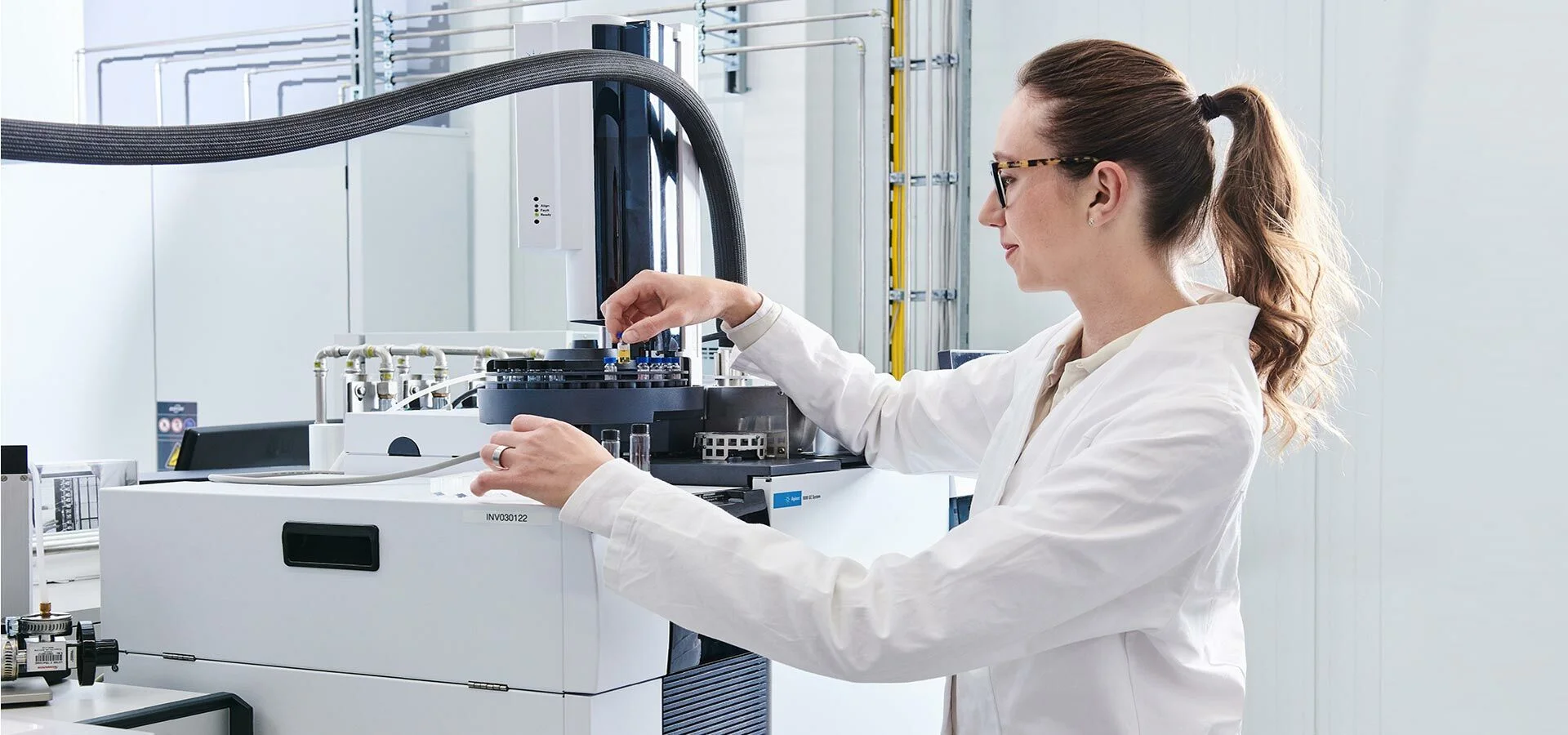



Managing a clinical laboratory is a permanent challenge: patient flows, crucial instructions, communicating results... Discover how an AI assistant transforms your organisation, guarantees pre-analytical quality and radically improves the patient experience.
The clinical laboratory is the silent engine of the healthcare system. Every day, thousands of samples pass through it, and the results they produce form the basis of countless diagnoses and therapeutic decisions. It is a highly technical environment, where rigour and precision are non-negotiable. Yet the shop window of this centre of excellence, its interface with the outside world, is often in the grip of organised chaos: a saturated telephone reception, anxious patients waiting for instructions or results, and secretarial staff who must juggle physical reception, file registration and an incessant flow of calls.
This communication overload is more than a simple inconvenience. It is a direct threat to the quality of the pre-analytical phase, the most critical and most error-prone step. A misunderstood instruction, an incorrect preparation, and the reliability of the analysis is compromised.
Faced with this major challenge, conversational artificial intelligence offers an opportunity for radical transformation. An AI assistant, far from replacing the biologist or the technician, becomes the central nervous system of the laboratory's communication. It guarantees the perfect transmission of information, streamlines interactions and frees teams to concentrate on their core business: science and care.
This article is a complete guide for laboratory directors, biologists and their teams, exploring how a voice AI solution like Tennor can optimise every facet of managing a clinical laboratory.
Running a laboratory is subject to constraints that exist nowhere else in the care pathway.
Unlike a specialist's practice, the clinical laboratory operates mainly on a just-in-time flow, with patients walking in without an appointment. This "walk-in" dynamic creates immense pressure on reception, which must manage an unpredictable flow of patients while answering a considerable volume of calls. Staff must multitask to the extreme: registering a file, answering the phone about opening hours, all while guiding a patient through a sample collection procedure.
This is the most fundamental challenge. The quality of an analysis begins long before the sample reaches the analyser. It begins with the patient's preparation. Failure to follow pre-examination instructions is the leading cause of non-compliant samples and uninterpretable results.
A few concrete examples of the consequences of poor preparation:
The clear, systematic and reliable transmission of these instructions is therefore a matter of quality and safety of care.
The laboratory's telephone reception is bombarded with questions that, although essential for the patient, are extremely repetitive for staff:
Every minute spent answering these questions is a minute not spent welcoming a patient on site or processing a complex file.
Faced with these challenges, an AI assistant like Tennor acts as an intelligent control centre, structuring and securing the laboratory's communication.
The AI becomes the single, always-accessible source of truth for patients.
Case study 1: Avoiding a preparation error for an OGTT test A diabetic patient must undergo an oral glucose tolerance test (OGTT). They call the laboratory to confirm.
Patient: "Hello, I have to do a sugar test tomorrow, are there any instructions?" Tennor AI: "Do you mean the oral glucose tolerance test, or OGTT? For this examination, which lasts about 2 hours, you must have been strictly fasting for 12 hours. You must not drink, eat or smoke. You will remain at the laboratory for the entire duration of the test. This is an imperative instruction for the reliability of the results."
This information, delivered clearly, avoids an unnecessary journey and guarantees the quality of the analysis.
The AI never communicates the medical results themselves, which would breach confidentiality rules. Instead, it automates the management of results status, which eliminates the majority of follow-up calls.
Case study 2: Results availability notification workflow
This proactive system reduces results-related calls by more than 80%, freeing up considerable time for the team.
The impact of AI spreads to every level of the clinical laboratory's organisation.
By automating first-level communication, the AI allows reception staff and technicians to focus on their critical missions:
By guaranteeing the systematic and correct transmission of instructions, AI directly contributes to reducing the rate of non-compliant samples. Fewer rejected samples means:
The AI can be configured to recognise calls from other healthcare professionals. If the caller introduces themselves as "Dr. Dubois" or "the nurse from the cardiology department", the AI can route the call with high priority to a dedicated line or directly to the on-call biologist, ensuring smooth interprofessional communication.
For the patient, interacting with the laboratory becomes simpler and more efficient.
Case Study 3: Reminder Campaign for Diabetic Follow-up The lab can program Tennor to contact known diabetic patients every 3 months.
Voice Call: "Hello, this is a message from your lab. We are contacting you as part of your diabetes management. Your doctor recommends a check of your glycated hemoglobin (HbA1c) every three months. Please remember to visit the lab soon for this important check-up."
This proactive approach improves adherence, prevention, and strengthens the lab's role as a local healthcare provider.
1. Our primary business is "walk-ins." How can AI designed for appointment booking be useful to us?
That's an excellent question that highlights the flexibility of AI. For a lab, AI is not used as a scheduling tool, but as a smart information and qualification hub. Its main role is to manage the flow of questions in advance so that when the patient arrives, they are perfectly prepared. It manages communication, not the schedule. This is a paradigm shift compared to a traditional medical practice.
2. Can AI provide medical results over the phone? Isn't that a privacy risk?
Absolutely not. Providing results over the phone (whether by a human or AI) is a risky and ill-advised practice. Tennor's AI is programmed to never communicate a medical result. Its role is to manage the status ("your results are ready", "they are being analyzed") and direct the patient to the secure consultation channel (web portal, results server) or inform them that the results have been sent to their doctor. Security and confidentiality are thus preserved.
3. We perform hundreds of different types of analyses, each with its own instructions. Can AI handle this complexity?
Yes, that's precisely what it's designed for. The solution is based on a centralized and customizable knowledge base. During implementation, we integrate your entire sampling manual. Each analysis is associated with its own instructions (fasting, timing, specific collection...). When the patient mentions a test, the AI draws from this database to provide accurate information validated by your biologists.
4. Calls from doctors and nurses are prioritized. How does AI make a difference?
The system uses several methods of recognition and priority routing. AI can identify pre-registered phone numbers as belonging to professionals. It can also recognize phrases like "This is Dr. Martin for biological advice" or "Home nurse for a sample collection." As soon as this context is detected, the call is taken out of the standard flow and directed to the appropriate line, bypassing the classic reception.
5. What is the return on investment (ROI) for a laboratory? There are no "missed appointments" to save.
ROI in a laboratory is measured differently, but it is just as powerful:
The clinical laboratory of the future will not only be distinguished by the performance of its automated systems, but also by the intelligence of its communication. In an environment where the pre-analytical phase is paramount and where pressure on teams is immense, conversational artificial intelligence is no longer an option. It is the missing link that ensures the fluidity, security, and quality of the entire patient journey.
By acting as an infallible guardian of protocols, a 24/7 information center, and a regulator of communication flows, a solution like Tennor transforms laboratory organization. It reduces errors, decreases staff stress, and offers patients a modern, reassuring, and efficient experience. Ultimately, it allows every member of the laboratory to focus on their noblest mission: providing reliable results for an accurate diagnosis.

+4M calls answered. Join partners who trust Tennor.